Research Group in Medical Informatics

Artificial intelligence, engineered for clinical practice.

West University of Timișoara · Center for Research in Computer Science (CeRiCS)

What we work on

Founded in 2022, the Research Group in Medical Informatics at the West University of Timișoara - a research group of the Center for Research in Computer Science (CeRiCS) - develops AI methods that move beyond benchmarks, into hospitals, clinics and medical education.

The group brings together faculty researchers, doctoral candidates and alumni collaborators around one question: how can intelligent systems genuinely support physicians and patients?

Our work covers the full pipeline, from raw medical signals and images to deployed decision-support systems, and is validated on real clinical data, often in collaboration with medical partners. Current projects range from retinal image analysis and 3D cardiac reconstruction to agentic AI systems connected to clinical workflows.
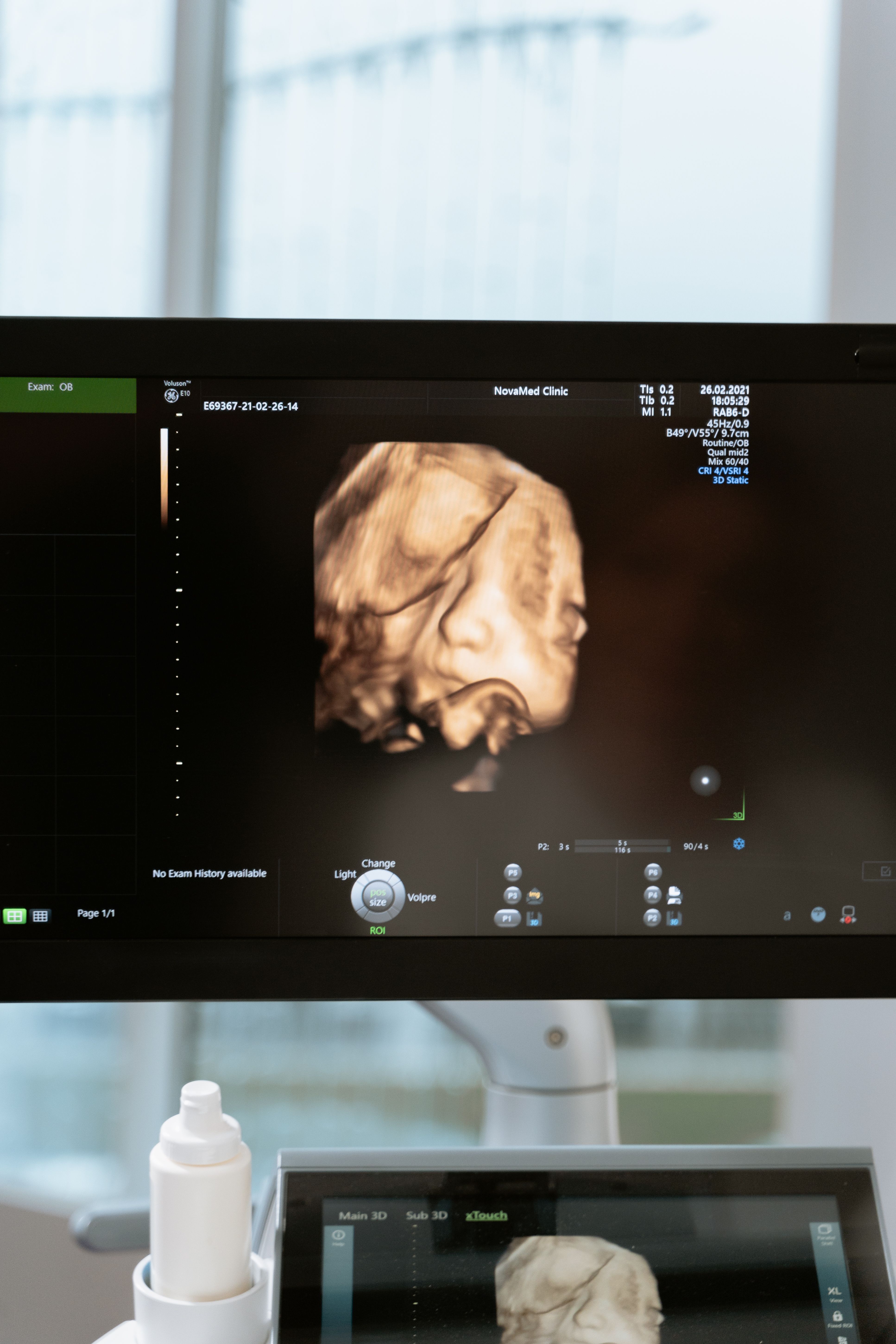
3D ultrasound imaging on a clinical workstation Medical imaging
Volumetric imaging - a core data modality across our projects, from segmentation and 3D reconstruction to clinical decision support.
Applied focus areas
Deep Learning Image Segmentation Medical Imaging OCT Analysis Agentic AI Multi-Agent Systems Computer Vision Diffusion Models Vision-Language Models 3D Reconstruction Virtual Reality Clinical Decision Support Machine Learning GANs Signal Processing Wearable Sensors Generative Models EHR Integration Explainable AI Robotic Process Automation IoT Healthcare Gait Analysis LLMs EEG Analysis Brain-Computer Interfaces Health Literacy Dermatology AI Digital Health Sleep Monitoring Cybersecurity

Research topics

Medical Imaging
& Computer Vision
  • Medical image analysis, segmentation and classification
  • 3D reconstruction from clinical imaging data
  • Multi-modality and cross-device image processing
  • High-performance computing for clinical imaging
Artificial Intelligence
& Machine Learning
  • Deep learning for clinical diagnosis and screening
  • Generative models for medical data augmentation
  • Multimodal and vision-language models in healthcare
  • Explainable and agentic clinical decision support
Biomedical
Signal Processing
  • Physiological and neurological signal analysis
  • EEG and brain-computer interface systems
  • Wearable sensing and continuous patient monitoring
  • Speech, movement and behavioural biomarkers
Digital Health
& Clinical Informatics
  • Digital health platforms and clinical workflows
  • Health communication, literacy and patient engagement
  • Clinical data integration and process automation
  • Predictive modelling and medical statistics

Meet the team

Faculty advisors
Sebastian Ștefănigă

Sebastian Ștefănigă

Lecturer, PhD · Group Lead
sebastian.stefaniga@e-uvt.ro

Leads the group's research agenda across deep learning for medical imaging, clinical decision support and lightweight VLM integration. Co-author on the group's work in OCT analysis, oral disease diagnostics, cardiac reconstruction and gait monitoring.

Todor Ivașcu

Todor Ivașcu

Lecturer, PhD · Co-Advisor
todor.ivascu@e-uvt.ro

Researcher and co-advisor specializing in computer vision and machine learning for medical diagnostics. Works on generative augmentation for scarce medical datasets and on efficient vision-language architectures for healthcare.

External collaborators
Robert Ileșan

Robert Ileșan

Dr. med. Dr. dent. · LUKS, Luzern
ilesan.robert@yahoo.com

Senior Physician (Oberarzt) at Luzerner Kantonsspital (LUKS), Clinic for Oral, Maxillofacial and Facial Surgery, Luzern. Co-investigator on the group's wearable physiograph for Parkinson's disease gait monitoring, contributing to clinical data collection and sensor validation.

Paul Faragó

Paul Faragó

Assoc. Prof., PhD
paul.farago@bel.utcluj.ro

Researcher at the Biomedical Engineering Lab, Technical University of Cluj-Napoca; co-author on wearable sensor research for Parkinson's disease gait monitoring and signal classification.

Sorana D. Bolboacă

Sorana D. Bolboacă

Prof. Dr. Habil. · Medical Doctor
sbolboaca@gmail.com

Professor at Iuliu Hațieganu University of Medicine and Pharmacy Cluj-Napoca, specializing in biostatistics and clinical research. Co-author on the ALSATION study protocol for cross-cultural adaptation of WHO health literacy instruments.

Radu Moleriu

Radu Moleriu

Associate Professor
radu.moleriu@e-uvt.ro

Associate Professor at Victor Babeș University of Medicine and Pharmacy Timișoara, University Department of Medical Informatics and Biostatistics, contributing statistical methodology and quantitative analysis to the group's clinical research projects.

Lavinia Moleriu

Lavinia Moleriu

Senior Lecturer
moleriu.lavinia@umft.ro

Senior Lecturer at Victor Babeș University of Medicine and Pharmacy Timișoara, University Department of Medical Informatics and Biostatistics, providing clinical domain expertise for the group's applied health informatics research.

Călin Muntean

Călin Muntean

Senior Lecturer · Medical Doctor in Public Health
calin.muntean@gmail.com

Senior Lecturer at Victor Babeș University of Medicine and Pharmacy Timișoara, University Department of Medical Informatics and Biostatistics. Medical Doctor in Public Health; co-author on research exploring ChatGPT for digital healthcare communication and on the ALSATION cross-cultural health literacy validation study.

BSc students
Andrei-Marius Stoica

Andrei-Marius Stoica

andrei.stoica04@e-uvt.ro

Co-author on CNN-based skin cancer risk assessment using the HAM10000 dermoscopic dataset, classifying skin lesions into seven categories for accessible early screening.

MSc students
Eugen Miclea

Eugen Miclea

eugen.miclea02@e-uvt.ro

Zero-knowledge proofs for privacy-preserving verification of medical measurements: proving that values from digitally signed documents meet a threshold without revealing the underlying data.

Stefan Secrieru

Stefan Secrieru

stefan.secrieru@e-uvt.ro

Research spanning digital health and cybersecurity. Developed a custom WordPress plugin for native-like delivery of digital health literacy questionnaires in the ALSATION study. Co-author on a comparative performance analysis of firewall-based intrusion detection systems on home computers.

Radu Fleșar

Radu Fleșar

radu.flesar02@e-uvt.ro

Research on an AI-based wearable physiograph for gait monitoring in Parkinson's disease: CNN classification of correlation matrices from EMG and plantar pressure signals, with conditional GAN augmentation.

Collaborators · Alumni
Iulian Roman

Iulian Roman

iulian.roman@e-uvt.ro

Author of PillsButler, a human-centered automated pill dispenser with closed-loop retrieval verification, Raspberry Pi control and a Flutter/Firebase companion app for real-time medication adherence monitoring.

Ioana Morariu

Ioana Morariu

ioana.morariu@e-uvt.ro

Research on 3D reconstruction of the human heart from CT volumes: segmentation, Marching Cubes mesh generation and a VR prototype for interactive anatomical visualization in medical education.

Iosif-Beniamin Goga

Iosif-Beniamin Goga

iosif.goga01@e-uvt.ro

Research on EEG signal classification for brain-computer interface applications, focusing on visually evoked potentials (VEPs) and steady-state VEPs. Developed a P300 speller, a browser navigation plugin and a desktop control system driven entirely by visual brain signals. Presented at RoMedINF 2025.

PhD candidates
Mihai Gherginescu

Mihai Gherginescu

mihai.gherghinescu00@e-uvt.ro

Doctoral research on agentic AI for autonomous and adaptive medical problem solving. Published work on VLM and MCP integration for healthcare and GAN-assisted oral disease detection; currently building LLM-driven self-diagnosis platforms with EHR integration.

Alexandru Farcaș

Alexandru Farcaș

alexandru.farcas01@e-uvt.ro

Doctoral research on deep learning for medical imaging and clinical decision support. First author of the KES 2026 paper on an end-to-end framework for OCT speckle denoising and AMD detection, combining UNet, CNN classification and diffusion synthesis.

Research activity

Conference paperAccepted for publication · 2026

An End-to-End Deep Learning Framework for Speckle Noise Removal and Pathology Detection in OCT Imaging

A.-R. Farcaș, S.-A. Ștefănigă

A three-stage pipeline combining UNet denoising, VGG16-derived binary classification (healthy vs. AMD) and a diffusion model for synthetic OCT generation, trained on the OCTDL dataset. Generalizes across device variations without manual calibration.

96% accuracy · 97.83% recall on denoised images · 300 diffusion epochs
Conference paper2025

Mononucleosis Oral Disease Detection with the Help of GANNs

M. Gherghinescu, T. Ivașcu, S. Ștefănigă

A curated dataset of 832 labeled oral images, of which 382 were generated with a DCGAN to address class imbalance, and an ensemble of three binary CNN classifiers detecting tonsillitis, pharyngitis and mononucleosis.

90% accuracy · 0.93 ROC-AUC · 0.90 F1
Conference paper2025

A Lightweight Approach for Improving VLM Accuracy for Medical Usage

M. Gherghinescu, T. Ivașcu, S. Ștefănigă, V. Negru

Specialized vision capabilities integrated into vision-language models through the Model Context Protocol, with no retraining required. Validated on medical image understanding, captioning and diagnostic reasoning at a fraction of fine-tuning cost.

0.92 F1 (Qwen3 + MCP) · 5.36 s inference · 11× faster than fine-tuned baseline
Conference paper2025

Three-Dimensional Reconstruction of the Human Heart from Computed Tomography Volumes

I.-A. Morariu, S.-A. Ștefănigă

An integrated pipeline converting clinical CT volumes into interactive 3D cardiac meshes through normalization, Flood-Fill segmentation and Marching Cubes, with a VR prototype for anatomical training. The modular design extends to other anatomical regions.

13–37 s per patient · 2–5M vertices · VR-ready
Abstract paper2025

Patient Gait Monitoring Classification for Parkinson's Disease

R.-C. Fleșar, S.-A. Ștefănigă, P. Faragó, R. R. Ilean

A wearable physiograph with plantar pressure sensors, EMG channels and wrist accelerometry, feeding a ResNet-based classifier trained on gait correlation-matrix surface plots, with conditional DCGAN augmentation of the patient dataset.

93% accuracy · 11 PD patients · cGAN augmentation
Abstract paper2025

PillsButler: A Human-Centered Pill Dispenser System

I. Roman, M. Reja

A medication adherence platform: modular tower dispenser on Raspberry Pi 5 with force-sensor verification of pill retrieval, Firebase real-time synchronization and a cross-platform Flutter app with QR pairing and missed-dose alerts.

Closed-loop verification · Multi-dispenser control · Real-time monitoring
Abstract paper2025

Electroencephalography Signal Analysis: Classification Techniques and Applications

I.-B. Goga

EEG signal processing and classification for brain-computer interfaces, centred on visually evoked potentials (VEPs) and steady-state VEPs (SSVEPs). Wavelet transforms and common spatial patterns for feature extraction; SVM for classification. Applications include a P300 speller, a browser navigation plugin and a desktop control system powered by visual brain signals.

SVM classifier · P300 speller · VEP / SSVEP
Abstract paper2024

Convolutional Neural Network for Skin Cancer Risk Assessment through Skin Lesion Analysis

A.-C. Berindeie, I.-A. Morariu, A.-M. Stoica

A mobile application using a CNN trained on the HAM10000 dermoscopic dataset (10,000+ images) to classify skin lesions into seven categories and indicate malignancy risk, targeting early accessible screening for the general public at a precision level aligned with clinical benchmarks.

≥93% target accuracy · HAM10000 · 7 lesion categories
Journal paper2024

ALSATION Study Protocol: Romanian Translation of Three Health Literacy Surveys

A.-A. Cordoș, S.-A. Ștefănigă, C. Muntean, C.V. Vernic, S.D. Bolboacă

A seven-step protocol for the Romanian translation, cultural adaptation and psychometric validation of three WHO M-POHL health literacy instruments: HLS19-DIGI (digital health literacy), HLS19-NAV (internet navigation) and HLS19-COM-P-Q11/Q6 (communication with healthcare providers).

3 WHO instruments · 7-step validation · M-POHL
Conference paper2025

Multimodal Sleep Stage Classification for Smart Wake-Up Using MSC-Transformer

A.-M. Stoica

A low-cost system combining a 3-electrode EEG headband with a wrist unit (PPG, EDA, accelerometer). An MSC-Transformer trained on the DREAMT dataset classifies sleep stages in 30-second windows; a smart alarm triggers wake-up during light sleep (N1/N2) to minimise sleep inertia. Merging N1/N2 into a single Light class improved accuracy by 6% over the standard 5-class setup.

79.27% test accuracy · 91% precision, 83% recall (light sleep) · 4-class · 100 subjects
Abstract paper2025

Custom WordPress Plugin for Native-Like Digital Health Literacy Questionnaires: Supporting the ALSATION Study

Ș. Secrieru

A custom WordPress plugin preserving the tabular structure and native look of WHO M-POHL health literacy questionnaires, enabling bias-free online dissemination for expert and general-population evaluation steps of the ALSATION study. No existing plugin or third-party solution provided equivalent form fidelity.

ALSATION integration · Steps 5–7 support · Native-form fidelity
Conference paper2025

Assessing the Performance Overhead of Firewall-based Intrusion Detection Systems on Home Computers

Ș. Secrieru, S.-A. Ștefănigă

Comparative performance analysis of GData, Avast One Firewall (Windows) and Snort (Ubuntu) on home-user systems, shifting the perspective from enterprise benchmarks to everyday computing. Statistical analysis of multiple key performance metrics demonstrates measurable but asymmetric overhead across tested security configurations.

GData · Avast · Snort · Windows & Ubuntu
Abstract paper2024

Leveraging ChatGPT for Digital Healthcare Speech Writing

A.-A. Cordoș, S.-A. Ștefănigă, C. Muntean

Comparative analysis of ChatGPT outputs in 2023 and 2024 for generating structured healthcare discourse across three domains - healthcare workforce crisis, increasing complexity of care and wasted capacity - evaluating the evolution of LLM capabilities for digital health communication.

ChatGPT 2023 vs. 2024 · 3 healthcare domains